
Nutrition Guide for Swimming Players in India
What you eat directly affects how you perform in Swimming. Indian diets have unique advantages (variety of grains, legumes, and spices) and unique challenges (high oil content, irregular meal timing, limited sports nutrition awareness). This guide provides a practical, India-specific nutrition plan for Swimming players at every level.
The Indian Athlete's Plate
Unlike Western sports nutrition that revolves around chicken breast and broccoli, Indian athletes have access to incredibly diverse, nutrient-dense foods. The ideal meal plate for a Swimming player:
- ●40% complex carbohydrates: brown rice, roti (wheat/multigrain), oats, sweet potato, quinoa. These fuel your training.
- ●30% protein: dal, paneer, eggs, chicken, fish, curd, sprouts, soy. Protein repairs muscles after training.
- ●20% vegetables and fruits: seasonal sabzi, salads, banana, papaya, pomegranate. Micronutrients support recovery.
- ●10% healthy fats: nuts, seeds, ghee (in moderation), olive oil. Fats are essential for joint health and hormone function.
Pre-Training Nutrition
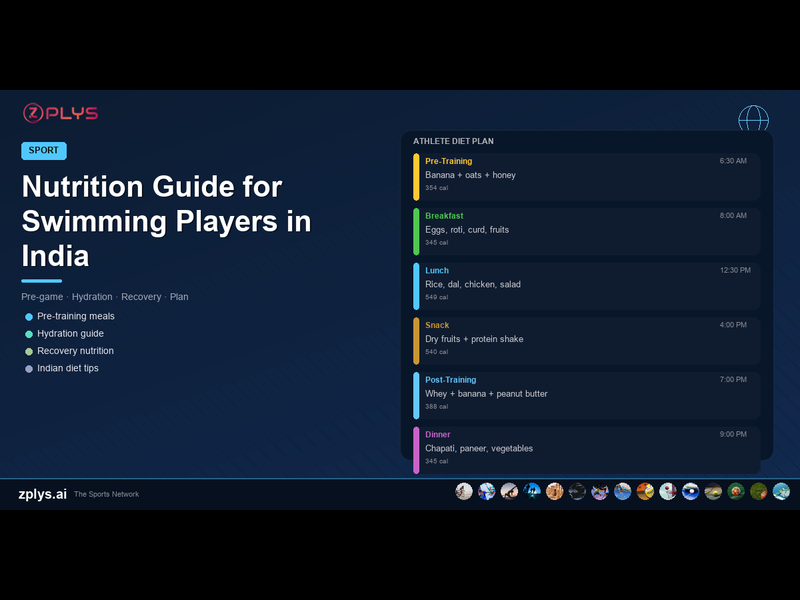
Eat 2-3 hours before training. The meal should be carb-heavy and easy to digest:
- ●Option 1: Idli/dosa with sambar (South Indian athletes swear by this)
- ●Option 2: Oats with banana and honey
- ●Option 3: Roti with dal and a small portion of sabzi
- ●Option 4: Poha or upma with peanuts
Avoid heavy, fried, or very spicy food before training. A paratha dripping with butter might taste great but it sits in your stomach and slows you down.
During Training and Matches
For sessions under 60 minutes: water is sufficient (200ml every 15 minutes). For sessions over 60 minutes or in Indian summer heat: electrolyte drinks (ORS, nimbu pani with salt, or commercial sports drinks). For multi-match tournament days: small snacks between matches - banana, energy bar, dates, or a handful of nuts.
Post-Training Recovery Meal
Eat within 30-45 minutes after training. This is the recovery window:
- ●Immediate: a glass of milk or buttermilk with a banana
- ●Within 1 hour: a full meal with protein emphasis - rajma chawal, chicken curry with rice, egg bhurji with roti, or paneer bhurji
Vegetarian Athletes
India has one of the world's largest vegetarian populations, and vegetarian athletes can absolutely compete at the highest levels. Key protein sources for vegetarian Swimming players: paneer (18g protein per 100g), dal and legumes (7-9g per cooked cup), soy chunks (52g per 100g dry), Greek yogurt/curd (10g per cup), nuts and seeds (15-20g per 100g), and eggs (if lacto-ovo vegetarian, 6g per egg).
The challenge for vegetarians is hitting 1.2-1.5g protein per kg body weight daily. For a 70kg player, that is 84-105g of protein. This requires deliberate planning but is entirely achievable with Indian vegetarian foods.
Supplements - What Actually Works
Most supplements are unnecessary if your diet is good. The three that have strong evidence for athletes: whey protein (convenient way to hit protein targets, Rs 1,500-3,000/kg), creatine monohydrate (5g daily, improves power output, Rs 500-1,000 for 3 months), and vitamin D (most Indians are deficient, especially those training indoors, Rs 200-500 for 3 months of supplementation). Everything else - BCAAs, fat burners, mass gainers, pre-workouts - is either unnecessary or unproven for recreational athletes.
Hydration in Indian Climate
Indian athletes chronically underhydrate. The minimum for a training day: 3-4 liters of water, plus 500ml for every hour of training. Signs of dehydration: dark urine, headache, fatigue, decreased performance, and muscle cramps. During Indian summers (March-June), add electrolytes to your water and avoid training during 11 AM - 4 PM.
The Bottom Line
Sports nutrition does not need to be expensive or complicated. Eat real Indian food, time your meals around training, hit your protein targets, and stay hydrated. These four principles cover 90% of what any Swimming player needs to fuel their performance.