
History and Evolution of Kabaddi in India

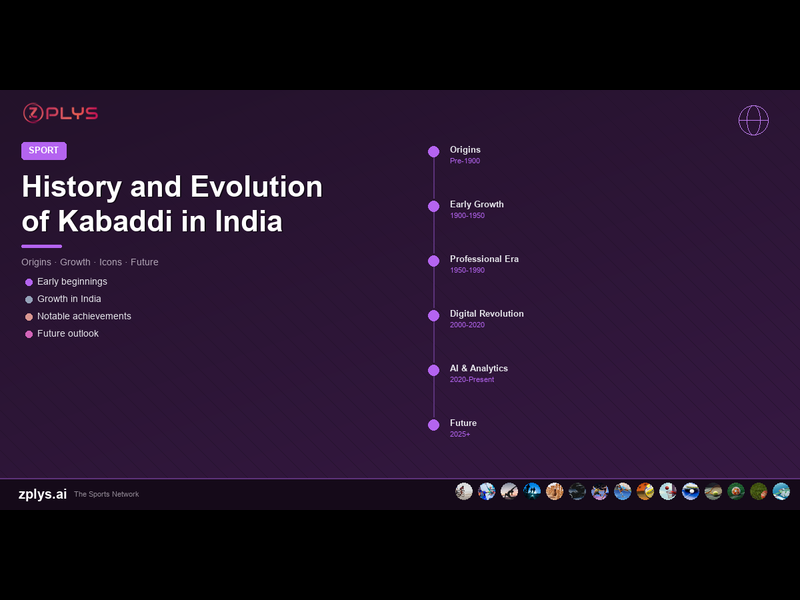
Kabaddi has a fascinating history in India that most modern players are completely unaware of. Understanding how the sport evolved - from its introduction to the current state - gives context to why the training methods, tournament structures, and competitive culture look the way they do today.
Origins and Early Days
Kabaddi arrived in India through a combination of British colonial influence, indigenous sporting traditions, and international exchange. The sport's governing body in India, Amateur Kabaddi Federation of India, was established to organize competitive play and represent India internationally under IKF.
The early decades were dominated by a few clubs in major cities - Pune, Jaipur, and Patna were among the first hubs. Access was limited to elite clubs and military establishments. Equipment was imported and expensive, and coaching was informal.
The Growth Phase (1990s-2010s)
India's economic liberalization in the 1990s transformed the sports landscape. Private academies emerged, television brought international Kabaddi to living rooms, and a growing middle class could afford to play. Key milestones during this period: establishment of professional leagues and ranking systems, Indian players achieving international success and inspiring the next generation, and corporate sponsorship beginning to flow into the sport.
The number of Kabaddi facilities in Indian cities grew 5-10x during this period. What was once a sport for a privileged few became accessible to the middle class.
The Digital Revolution (2015-Present)
Technology has transformed how Kabaddi is played, organized, and consumed in India. Key changes: online tournament registration replaced paper forms, live scoring allowed remote spectators to follow matches, video analysis became accessible through smartphones, social media created communities and accelerated sport discovery, and management platforms like Zplys automated the administrative side of academies and tournaments.
The result: more people playing, more tournaments organized, more coaches earning a living, and more sponsors investing. The Indian Kabaddi ecosystem in 2026 is unrecognizable compared to even 10 years ago.
Notable Indian Achievements
India has produced remarkable Kabaddi talent at the international level. These achievements inspire millions of young players across the country. The popular events that drive participation: Pro Kabaddi League, Senior National Championship.
The Current Landscape
Today's Indian Kabaddi scene is characterized by: thousands of academies across tier-1 and tier-2 cities, active tournament circuits at local, state, and national levels, growing corporate and school participation, increasing professionalization of coaching, and a strong pipeline of young talent emerging from structured academy programs.
The challenges remain: uneven facility distribution (metros vs smaller cities), limited government sports infrastructure, and the need for more qualified coaches. But the trajectory is unmistakably positive.
What the Future Holds
The next 5-10 years will likely see: continued growth in facility infrastructure driven by private investment, technology becoming standard in every tournament and academy, more Indian athletes competing and winning at international level, increasing career opportunities in sports beyond just playing, and Kabaddi becoming a mainstream fitness and social activity across age groups.
The Bottom Line
Understanding Kabaddi's journey in India helps appreciate how far the sport has come and the enormous potential ahead. Whether you are a player, coach, organizer, or fan, you are part of a story that is still being written - and the best chapters are ahead.