
How to Play Gymnastics - Complete Beginner's Guide

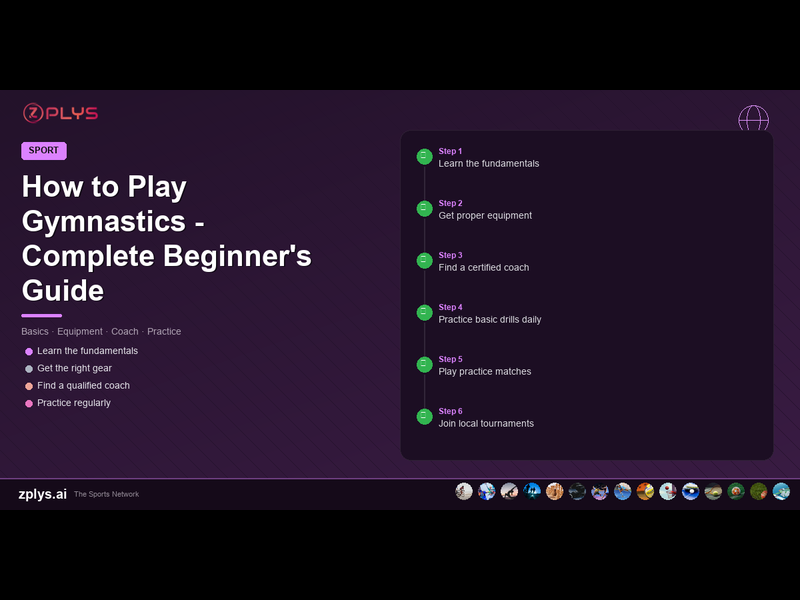
Gymnastics is one of the fastest-growing sports in India, with facilities springing up across Delhi, Agartala, Patiala, Bangalore and beyond. Whether you are a complete beginner picking up equipment for the first time or someone returning to the sport after years, this guide covers everything you need to know to start playing Gymnastics properly.
The beauty of Gymnastics is its accessibility. You do not need years of training to enjoy a game, but understanding the basics - the rules, the equipment, and the etiquette - makes the experience far better for everyone on the indoor gymnasium with apparatus.
The Basics - What is Gymnastics?
Gymnastics is played with individual all-around, apparatus finals, team. The sport is governed by Gymnastics Federation of India in India and FIG internationally. The scoring system uses difficulty (D) + execution (E) scores, deductions.
The playing area is a indoor gymnasium with apparatus. Most facilities in Indian cities charge Rs 1,000-3,000 per month for access and coaching.
Equipment You Need
Before your first session, here is what you need:
- ●●vault
- ●●uneven bars
- ●●balance beam
- ●●floor mat
- ●●rings
For beginners, do not overspend on equipment. A mid-range setup costs Rs 2,000-5,000. Upgrade once you know you are committed. Many academies in Delhi and Agartala provide equipment for trial sessions.
Basic Rules and Scoring
Understanding scoring is crucial: difficulty (D) + execution (E) scores, deductions. Common formats in Indian tournaments include qualification + finals, age-group competitions, apparatus-specific.
The most important rules for beginners to remember: stay within the playing area, follow the rotation/service rules, and respect the officials. Most recreational games in India are self-officiated, so knowing the rules prevents disputes.
Where to Play in India
Gymnastics facilities have expanded rapidly across Indian cities. The best places to find courts and coaching:
- ●●Delhi - multiple academies and clubs with regular sessions
- ●●Agartala - multiple academies and clubs with regular sessions
- ●●Patiala - multiple academies and clubs with regular sessions
- ●●Bangalore - multiple academies and clubs with regular sessions
- ●●Kolkata - multiple academies and clubs with regular sessions
Google Maps is the easiest way to find nearby facilities. Search "Gymnastics academy near me" - the results typically show rated facilities with reviews from other players.
Getting Started - Your First Session
Your first session should focus on these fundamentals:
- ●●flexibility
- ●●strength conditioning
- ●●routine composition
- ●●landing technique
Most academies offer free trial sessions. Take advantage of these before committing to a monthly plan. A good coach makes a massive difference in how quickly you progress.
Joining the Community
The Gymnastics community in India is welcoming and growing. Join local WhatsApp groups, follow Gymnastics Federation of India updates, and participate in local tournaments once you are comfortable with the basics. Entry fees for beginner tournaments are typically Rs 500-2,000.
Platforms like Zplys help you find local tournaments, track your progress, and connect with other players in your city. The Gymnastics community in Delhi alone has hundreds of active players competing regularly.
The Bottom Line
Gymnastics is a sport that rewards consistency. You do not need to be naturally gifted - regular practice, proper technique, and good coaching will take you from a complete beginner to a confident player in 3-6 months. Start this week. Find a facility near you, book a trial session, and take the first step.
Common Mistakes Beginners Make
Every sport has a set of mistakes that beginners consistently make. The most common ones include skipping warm-up (which leads to injuries in the first month), focusing on power before technique (power without control is wasted energy), not watching experienced players (observation is one of the fastest learning tools), training alone instead of with a partner or group (you need real game situations to improve), and ignoring footwork (in almost every sport, your feet determine 80% of your success).
A coach in Pune shared that the single biggest difference between students who progress quickly and those who plateau early is whether they practice deliberately - with specific goals for each session - or just show up and go through the motions. Set a goal before every training session. Even something as simple as "today I will focus on my backhand" makes a measurable difference over 30 days.
Building a Training Routine
A sustainable training routine for beginners follows the 3-2-1 pattern: 3 practice sessions per week, 2 rest days between intense sessions, and 1 match or game day per week. This gives your body time to recover while maintaining enough frequency for skill development. Most Indian academies structure their batches around this pattern.
Track your attendance and progress. Use a simple notebook or an app like Zplys to log what you practiced, what went well, and what needs work. After 30 days, review your notes - you will see patterns that tell you exactly where to focus next. The players who track their training improve 2-3x faster than those who don't.
When to Enter Your First Tournament
The right time to enter your first competitive event is after 3-4 months of consistent training, when your basics are reliable enough that you can complete a full match without technical breakdowns. Your first tournament is not about winning - it is about experiencing competitive pressure, learning how you respond to it, and identifying gaps that practice alone cannot reveal.
Look for beginner or recreational categories in local tournaments. Most cities have monthly events with entry-level divisions specifically designed for newer players. The experience of playing under pressure, with an audience and stakes, teaches you more in one day than a month of practice sessions.