
Doubles and Team Strategy in Golf
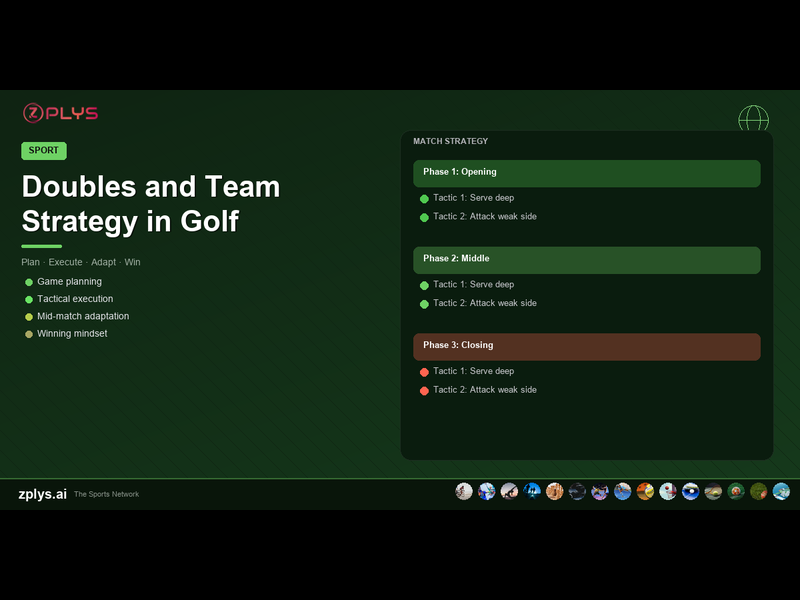
While Golf is primarily an individual pursuit, team dynamics play a crucial role in training environments, relay events, and club competitions. Understanding how to train effectively with others, support teammates, and leverage group dynamics can significantly improve individual performance.
Training Partners and Groups
The best individual Golf athletes in India do not train alone. Training partners provide: competitive intensity (pushing each other harder than solo practice), accountability (showing up consistently when someone is expecting you), real-time feedback (spotting technical errors that self-analysis misses), mental stimulation (varying training by working with different skill levels), and motivation during difficult training phases.
Finding the right training partner in Indian cities: join an academy or club, participate in group sessions, and identify players at a similar skill level. The ideal training partner is slightly better than you - challenging enough to push your limits without being discouraging.
Training Group Dynamics
A well-structured training group of 4-8 players creates an optimal learning environment. Rotate partners regularly to experience different styles, assign roles within drills (feeder, receiver, observer), use video recording for group analysis sessions, and create internal challenges (weekly leaderboards, time trials).
Academies in Delhi/NCR that implement structured group dynamics report 25-30% faster skill development compared to individual-only training approaches.
Team Events and Relays
Many Golf competitions include team events where individual performances contribute to a team score. Strategy for team competitions: know your team's strengths and assign events accordingly, support teammates during their performances (encouragement matters more than advice during competition), plan the order of events to maximize team points, and practice transitions and team routines before competition day.
Club and Academy Culture
The strongest Golf clubs in India build a culture that goes beyond individual achievement. Elements of great club culture: shared goals (club championships, inter-academy competitions), mentorship (senior players guiding juniors), social events (annual dinners, community service, team outings), identity and pride (club uniforms, traditions, values), and inclusive environment (welcoming new members regardless of skill level).
Coaching Multiple Athletes
For coaches managing groups of Golf athletes, effective strategies include: differentiated training within the same session (advanced and beginner drills happening simultaneously), peer coaching assignments (advanced students helping beginners reinforces both players' learning), group video analysis (reviewing match footage as a team builds shared tactical understanding), and periodic individual check-ins within the group framework.
The Bottom Line
Even in individual Golf, the team around you - training partners, coaches, club members - determines how fast and how far you progress. Invest in building your sports community as deliberately as you invest in your technique.