
A Parent's Guide to Padel in India
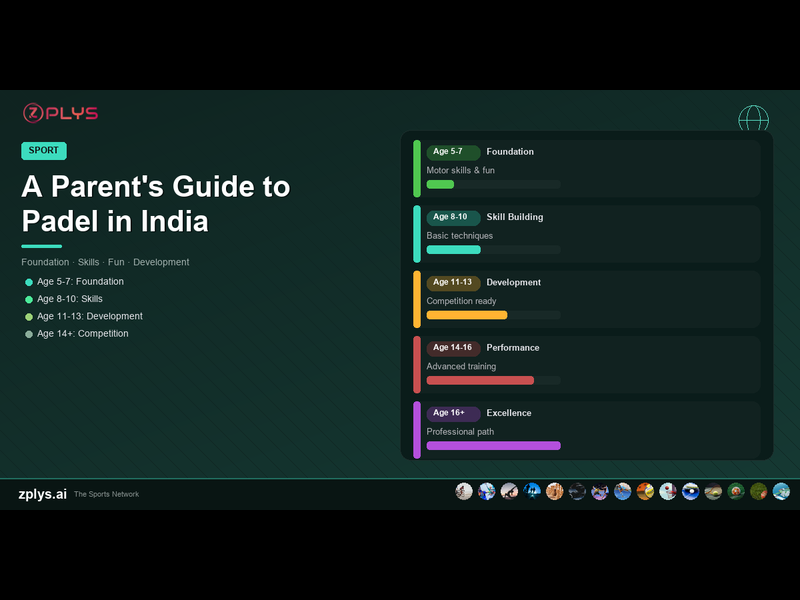
Your child wants to play Padel. Or maybe you want your child to play Padel. Either way, you have questions: Is this the right sport? How much will it cost? Is it safe? Can it lead to a career? This guide answers every question Indian parents typically have about enrolling their child in Padel.
Is Padel the Right Sport for My Child?
Padel is an excellent choice for children because it develops physical fitness, coordination, and discipline. It can be played by children as young as 5-6 years (with age-appropriate training) and remains a lifelong sport. The social skills developed through sports - teamwork, handling wins and losses, respecting opponents and officials - are as valuable as the physical benefits.
The honest answer to "is this the right sport?" is: let your child try it for a month. Most academies in Mumbai and Bangalore offer trial sessions. If your child enjoys it and wants to continue, you have your answer.
What Will It Cost?
Here is a realistic monthly budget for a child playing Padel in an Indian metro:
- ●Academy/coaching fees: Rs 500-1,200 per session, Rs 3,000-8,000/month
- ●Equipment (one-time, replaced annually): Rs 3,000-10,000
- ●Tournament entry fees (monthly): Rs 1,000-3,000 per team
- ●Transport to academy/courts: Rs 1,000-3,000/month
- ●Total monthly: approximately Rs 4,000-15,000 depending on level and city
This is comparable to other extracurricular activities like music lessons or additional tuition, and it comes with the added benefit of physical fitness and social development.
How to Choose an Academy
Five things to check before enrolling your child:
- Coach credentials - have they played at state/national level? Do they have a coaching certification from Padel Federation of India?
- Batch size - 6-10 students per coach is ideal. More than 12 means less individual attention.
- Safety measures - first aid kit, proper flooring/surface, age-appropriate equipment, and trained staff for emergencies.
- Structured curriculum - not just random drills. Ask what the progression plan looks like over 6-12 months.
- Communication - how will you be updated on your child's progress? Monthly reports, parent-teacher meetings, and digital tracking through platforms like Zplys are signs of a professional academy.
What to Expect in the First 6 Months
- ●Month 1-2: Your child learns basic rules, fundamental movements, and starts building coordination. Do not expect match-ready skills this early.
- ●Month 3-4: Basic techniques become more consistent. Your child can rally/play simple games. This is when most children decide whether they truly enjoy the sport.
- ●Month 5-6: Ready for their first internal competition or beginner tournament. This is a milestone moment - support it regardless of results.
The Tournament Question
Parents often ask: "When should my child enter tournaments?" The answer: after 4-6 months of regular training, when the coach recommends it. Early tournament experience is valuable, but premature competition can discourage children who are not ready. Trust the coach's judgment on timing.
Tournament entry fees range from Rs 1,000-3,000 per team. Your child's first tournament should be a local, low-pressure event in the beginner category.
Can Padel Be a Career?
The honest answer: for 99% of children, Padel will be a lifelong recreational activity and source of fitness, not a professional career. But sports teach discipline, time management, goal-setting, and resilience that directly transfer to any career. The 1% who do make it to professional or national level typically show exceptional aptitude by age 12-14 and train 15-20 hours per week.
Your Role as a Parent
The most important thing you can do: be supportive without being pushy. Attend matches but do not coach from the sideline. Celebrate effort, not just results. Do not compare your child to others. Pay fees on time and communicate with the coach regularly. Let your child own their sports journey.
The Bottom Line
Enrolling your child in Padel is one of the best investments you can make in their physical and personal development. Choose a good academy, support consistently, and let the sport do its work. The skills your child builds on the enclosed court 20m x 10m with glass walls will serve them for life.